



Price: $59.98 - $39.98
(as of Jul 22, 2026 22:29:49 UTC – Details)
Choosing a first drone for a child often feels like navigating a minefield of specifications, safety concerns, and conflicting reviews. Parents want something that sparks genuine excitement without overwhelming frustration – a device sturdy enough for learning yet simple enough for small hands to manage confidently. The fear of investing in a gadget that gathers dust after one frustrating flight, or worse, poses safety risks outdoors, is very real. Many entry-level options promise ease of use but deliver shaky controls, choppy video, or batteries that die before the fun truly begins. Finding that sweet spot where technology meets true beginner-friendliness requires looking beyond marketing claims and into the lived experiences of families who’ve actually flown these drones. This review examines one popular option – the X-shop HC024 – focusing specifically on how it performs in the hands of children aged 8-12, based on aggregated user feedback and its stated features, to help you determine if it aligns with your expectations for a stress-free introduction to aerial exploration.
The core appeal of this drone centers on its promise of immediate accessibility. Marketed explicitly as a "Great Drone for Beginners," it incorporates several design choices aimed at lowering the initial skill barrier. One-key takeoff and landing eliminates the tricky coordination often required for manual launches and landings, a common pain point for novices. Altitude hold uses internal sensors to maintain a steady height once activated, allowing the young pilot to focus on directional control rather than constantly adjusting throttle – a feature frequently highlighted in positive reviews as making early flights significantly less stressful. Headless mode, where the drone’s movement corresponds to the controller’s orientation regardless of its nose direction, simplifies navigation, especially when the drone is far away or at an awkward angle. These three features, combined with three selectable speed modes (Low/Medium/High), create a progressive learning curve. A child can start in Low speed with altitude hold and headless mode enabled, mastering basic hovering and gentle turns before gradually increasing speed or disabling assists as confidence builds. Reviewer Sixto Sanchez specifically noted the responsiveness and ease of use even for the inexperienced, while Arthas appreciated avoiding FAA-related complexity by choosing a model under 250g – a point we’ll explore further regarding regulatory ease.
Camera capability often drives the desire for a drone, and here the HC024 specifies a 90° adjustable 1080P HD camera with real-time FPV (First-Person View) transmission via a smartphone app. This means the child isn’t just flying blind; they see what the drone sees in real-time on their phone screen, framing shots as they go. The adjustable angle allows for varied perspectives – straight ahead for exploration or tilted downward for landscape-style captures. Effective still resolution is listed as 2MP, with video saved in MP4 format. User experiences with the camera are notably mixed in the provided feedback. Positive reviews, like Christina T.’s, describe the footage as "excellent" and "clear, stable," suitable for sharing on social media. Conversely, other users found the quality "disappointing" or merely "adequate for casual photos and videos." This variance suggests that while the hardware meets the 1080P spec on paper, real-world performance might be influenced by factors like lighting conditions, stability during flight (which we’ll address shortly), or the phone’s screen quality affecting the FPV preview. It manages expectations well to view this camera as functional for fun, shareable snippets and learning framing/composition, rather than professional-grade aerial photography – a reasonable trade-off for its target age group and price point.
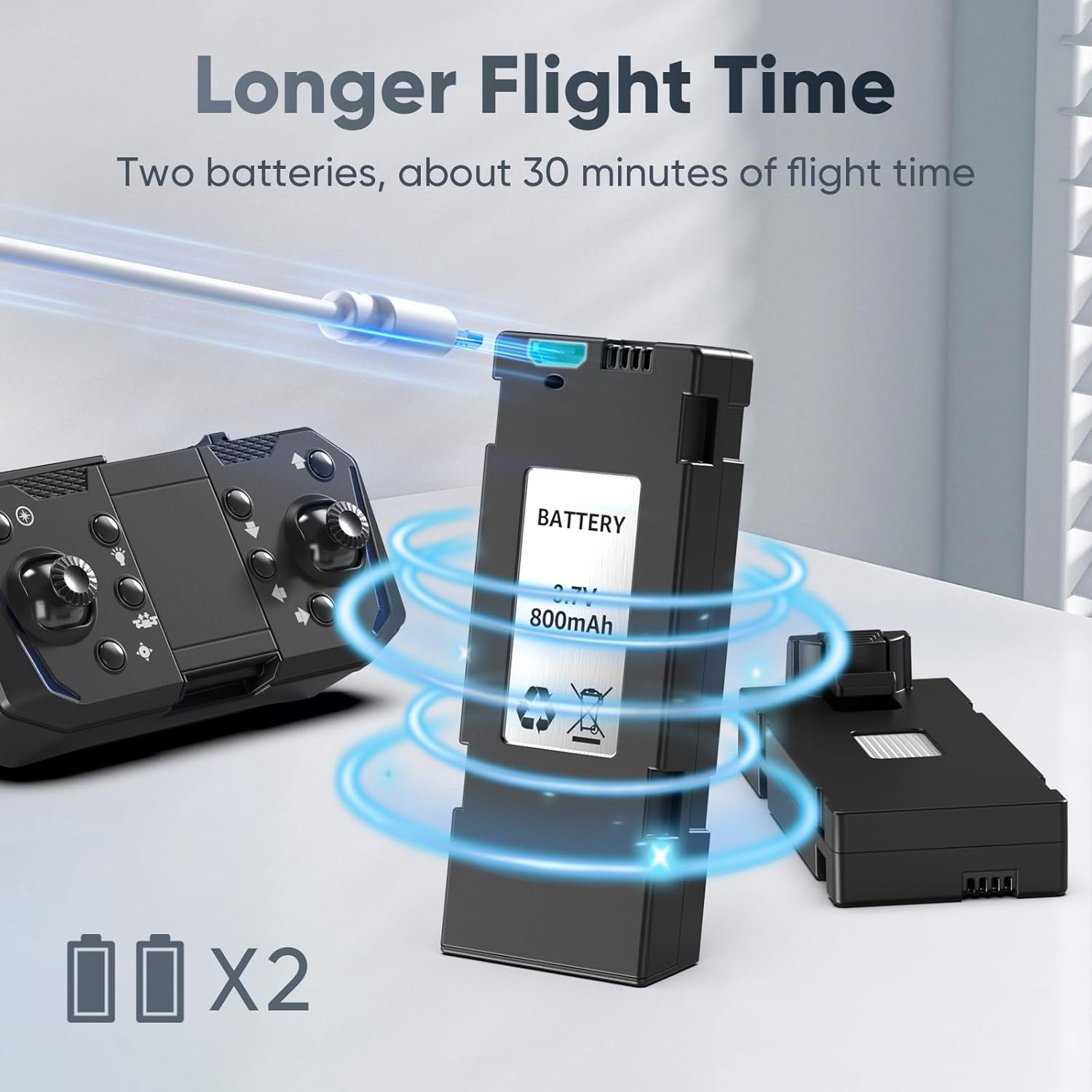
Flight time and reliability represent another area where user experiences diverge significantly, warranting careful consideration. The package includes two rechargeable lithium-ion batteries, with the claim of "up to 30 minutes of flight time" (implying ~15 minutes per battery). However, multiple reviewers reported starkly different realities. Dannyskibo cited "battery life not long at all," while Ramon’s review was particularly critical: "La batería dura solo 5 minutos" (The battery lasts only 5 minutes). Christina T., conversely, stated the battery life was "better than I expected, giving enough time to enjoy flying and recording videos." This inconsistency points to potential variables: battery health variation between units, differing definitions of "flight time" (hovering vs. active maneuvering affects drain), temperature impact, or even how firmly the batteries seat in their compartments – a specific issue mentioned by another reviewer who found one battery "incorrectly assembled in the case." The inclusion of two batteries does mitigate short single-charge sessions to some extent, allowing for a quick swap, but the inconsistency remains a notable concern highlighted in user feedback. Prospective buyers should manage expectations around flight duration and consider checking battery connections carefully upon arrival.
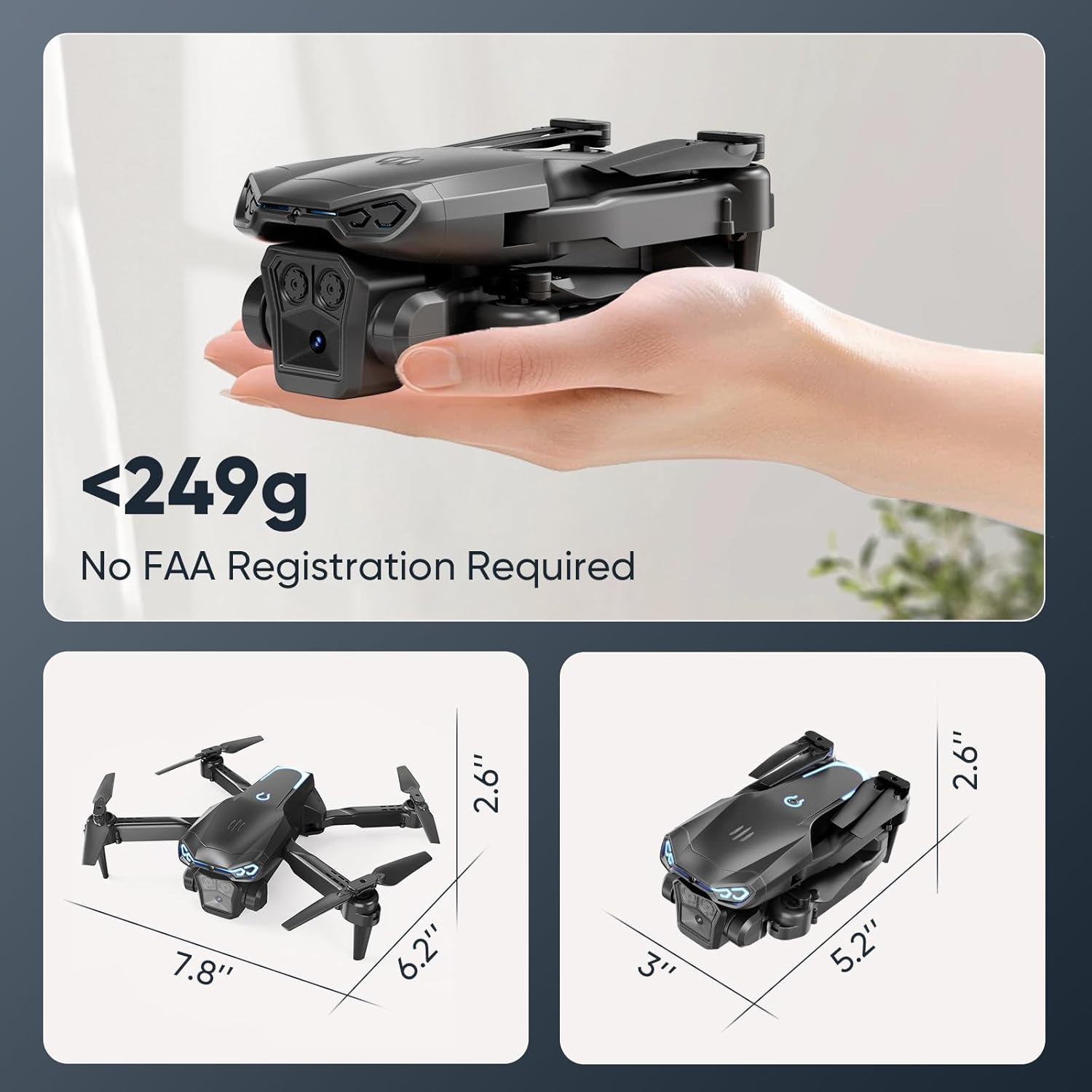
Build quality and durability also surface as points of contention in user reports. The drone’s lightweight design (under 250g, critical for avoiding FAA registration requirements as noted by reviewer Arthas) is achieved primarily through plastic construction, as confirmed in the additional details section. While this keeps the weight low and reduces injury risk from propeller contact, several reviews mention feeling the materials were "de muy baja calidad" (very low quality) or described the drone arriving with physical imperfections like scratches or non-functioning lights (as noted by Ramon and JASMIN M.). Reviewer Michael Hoffman’s frustration over unavailable replacement parts for lost propeller guards underscores a potential long-term vulnerability – if a small, breakable part is lost or damaged, repairing the drone might not be feasible, potentially shortening its lifespan. This contrasts with the positive notes about the included propeller guards and carrying case aiding storage and transport. The lightweight nature, while beneficial for portability and regulatory ease, appears to correlate with user reports of fragility in some instances, suggesting a trade-off between ease of transport/regulation compliance and perceived ruggedness. It reinforces the strong recommendation from the manufacturer and multiple reviewers to fly in open areas away from obstacles and to utilize those propeller guards diligently, especially during initial learning phases.
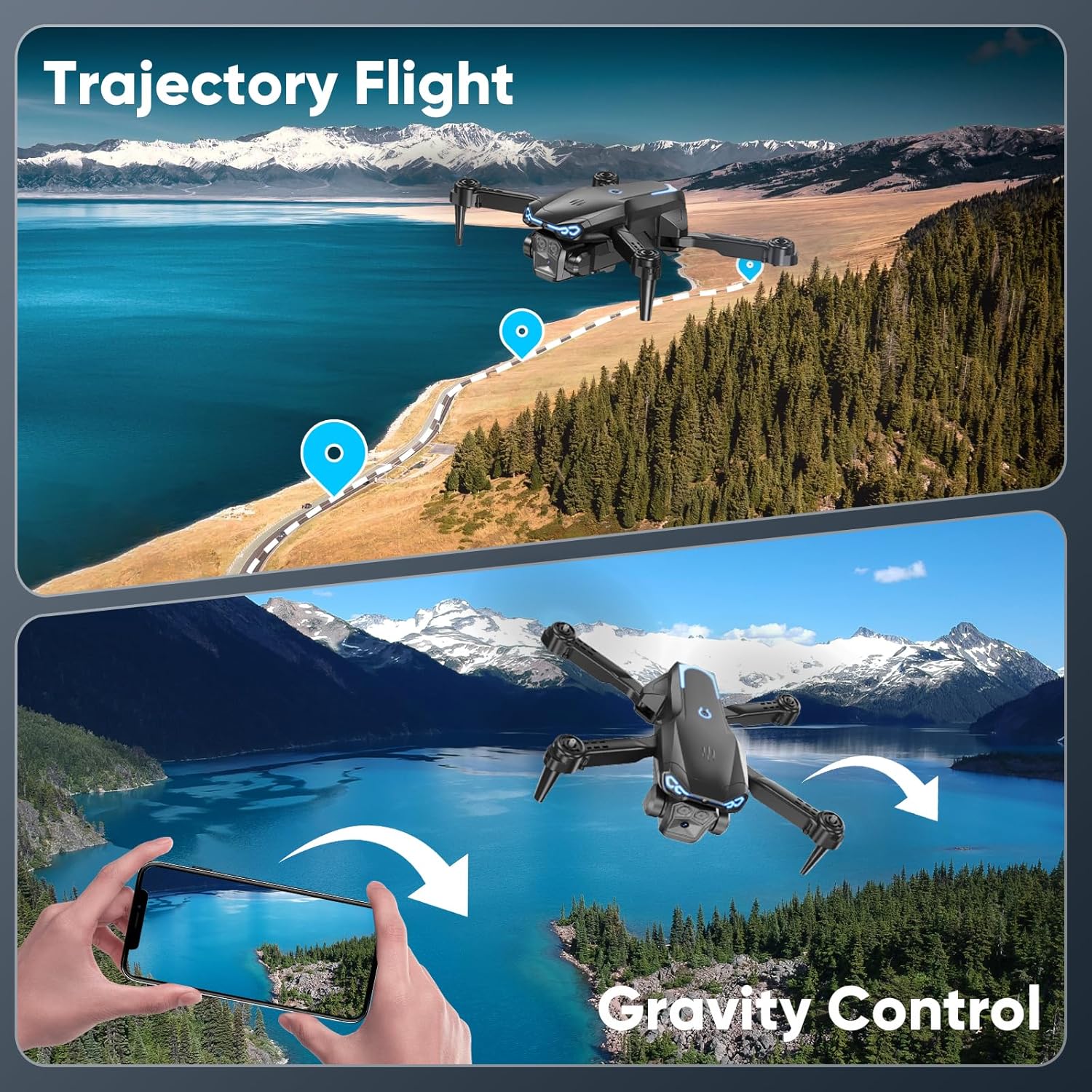
Beyond the core flying experience, the HC024 incorporates several interactive features designed to sustain engagement beyond basic piloting. Gesture control allows triggering photos or videos with specific hand movements detected by the drone’s optical sensor (CMOS technology), adding a playful, hands-free dimension. Trajectory flight lets users draw a path on their phone screen for the drone to follow automatically. Gravity sensing enables tilting the smartphone to control drone movement, mimicking how one might steer a racing game. The ability to perform 360° flips adds an element of stunt flying that often delights younger users. These features, accessible through the smartphone app (connecting via Wi-Fi and Bluetooth), aim to transform the drone from a simple flying toy into a more interactive creative tool. Reviewer Hassato Sanchez implied these features contributed to the "solid investment" feeling for beginners by offering varied ways to engage as skills develop. However, the effectiveness of these smart features likely depends on stable smartphone connectivity and adequate ambient light for the optical sensors to function reliably – factors not always within the user’s control and potentially contributing to the mixed stability reports mentioned by some users (e.g., "muy difícil de controlar" or signal loss leading to crashes, as cited by Cliente de Amazon and Ramon).
Setting realistic expectations is crucial when considering this drone for a child. Based on the aggregated feedback, it appears best suited for:
- Absolute beginners (children or adults) prioritizing ease of initial takeoff/landing and stable hovering (via altitude hold/headless mode).
- Families valuing portability and regulatory simplicity due to its sub-250g weight eliminating FAA registration needs in the US and similar regions.
- Users seeking a fun, introductory camera experience for casual aerial snapshots and videos, understanding that image quality may vary and isn’t professional-grade.
- Those able to supervise initial flights closely in wide-open, obstacle-free fields or parks, adhering to the strong recommendation to use propeller guards.
- Buyers accepting potential variability in battery life and build consistency, recognizing that while many report satisfactory experiences, a notable minority encountered issues with endurance or perceived durability.
It is likely less ideal for:
- Users expecting consistently long flight sessions (e.g., reliably exceeding 12-15 minutes per battery) without variability.
- Those requiring rugged construction capable of withstanding frequent minor impacts or rough handling without concern for damage.
- Older teens or adults seeking advanced performance (higher speeds, longer range, superior wind resistance, or obstacle avoidance as a primary feature – note: while "Obstacle Avoidance" is listed under special features, multiple user reviews focusing on control difficulty and signal loss suggest this may not be a robust or consistently reliable system in practice; treat this claim with caution based on feedback).
- Anyone needing guaranteed access to replacement parts for common wear items like propellers or guards.
The manufacturer’s emphasis on 24-hour customer support and the recommendation for first-use in open areas addresses some usability concerns proactively. The inclusion of a carrying case adds tangible value for storage and transport, protecting the drone between flights – a practical detail often appreciated by parents managing kids’ gear. Ultimately, the X-shop HC024 presents itself as a accessible gateway into drone flying, particularly compelling for its blend of beginner-friendly flight assists, real-time camera feedback, and features designed to maintain interest. Its strengths lie in lowering the initial intimidation factor significantly. However, the mixed user feedback regarding battery endurance, camera consistency, and perceived build durability necessitates a tempered approach. It isn’t a flawless, universally perfect device, but for the right user – a beginner child flying supervised in ideal conditions with managed expectations about flight time and potential fragility – it represents a plausible option to foster that initial joy of flight and exploration, provided one acknowledges the variability highlighted in real-world use. The decision hinges on weighing its undeniable ease-of-entry benefits against the documented inconsistencies in core performance areas reported by a significant segment of its user base.

