


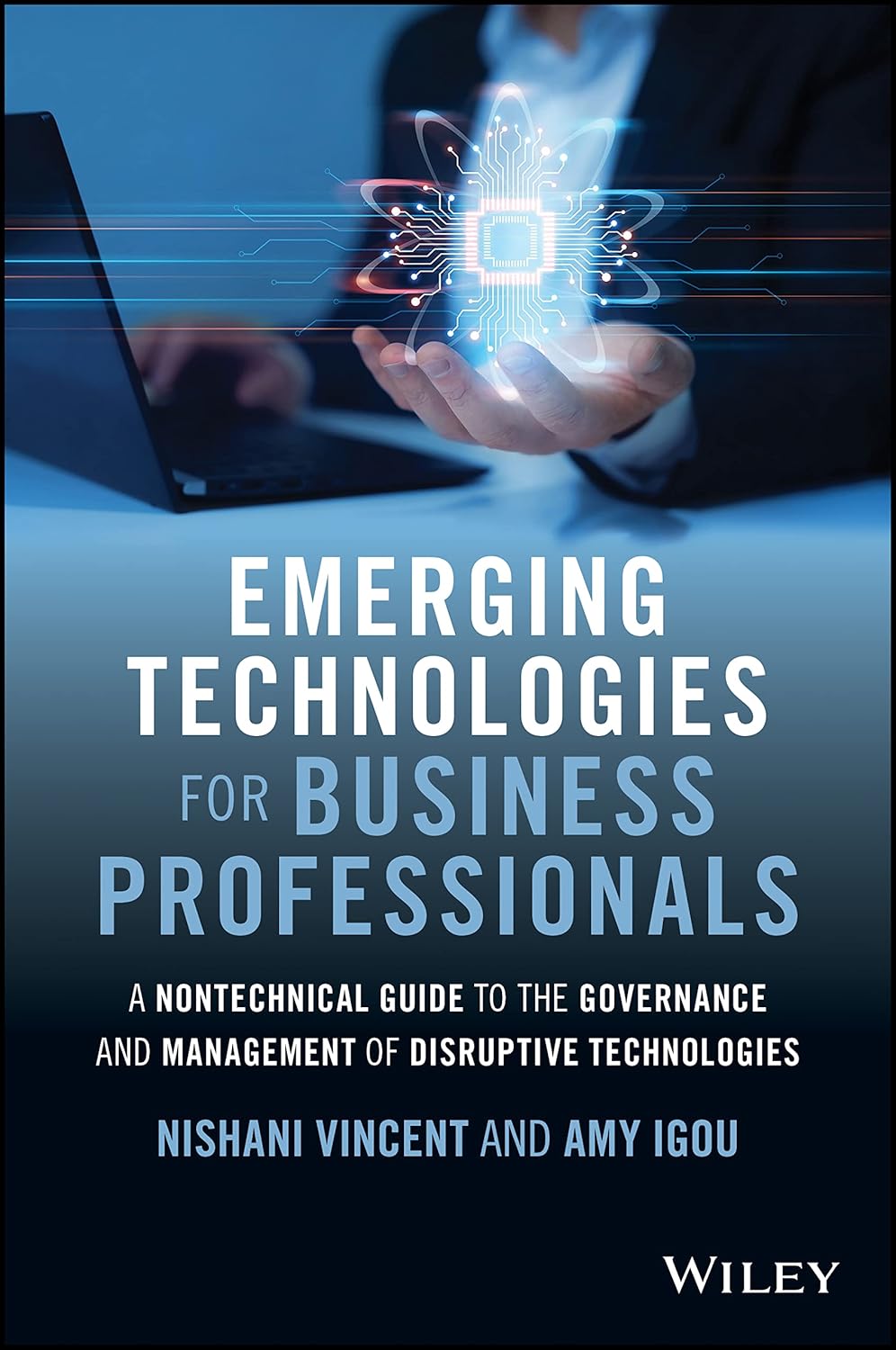
Price: $45.00 - $32.77
(as of Apr 25, 2026 18:00:47 UTC – Details)

Let’s be honest—when someone starts throwing around terms like “quantum computing” or “blockchain governance,” most of us business folks feel like we need a translator. You’re not alone if you’ve ever sat in a meeting nodding along while internally screaming “what does any of this actually mean for my bottom line?”
The truth is, emerging technologies aren’t just fancy buzzwords anymore. They’re reshaping how we do business, and if you’re not paying attention, you might find yourself wondering why your competitors are suddenly running circles around you. But here’s the good news: you don’t need a computer science degree to understand and leverage these technologies effectively.
Why Business Professionals Can’t Afford to Ignore Tech Anymore
Remember when having a website was considered “cutting-edge”? Those days are long gone. Today’s business landscape moves at breakneck speed, and the companies that thrive are the ones that embrace technological change rather than resist it. But embracing doesn’t mean you need to become a tech wizard overnight.
What it does mean is understanding how these technologies can solve real business problems. Can artificial intelligence help you process invoices faster? Absolutely. Can blockchain improve your supply chain transparency? You bet. The key is knowing which tools to use and when.
Think about it this way—you don’t need to know how an engine works to drive a car effectively. Similarly, you don’t need to understand the intricate coding behind AI to use it strategically in your organization. What you do need is a clear understanding of what these technologies can and can’t do for your business.
The pace of technological change has accelerated exponentially over the past decade. Consider that smartphones didn’t exist twenty years ago, yet today they’ve fundamentally transformed how we communicate, shop, and conduct business. The same disruptive potential exists with today’s emerging technologies. Companies that fail to adapt risk becoming obsolete, while those that strategically adopt new technologies often discover entirely new revenue streams and operational efficiencies they never imagined possible.
What’s particularly exciting about this moment in history is the democratization of advanced technology. Tools that once required massive IT departments and million-dollar budgets are now accessible to small and medium-sized businesses through cloud-based solutions and user-friendly interfaces. This levels the playing field in unprecedented ways, allowing nimble organizations to compete with industry giants by leveraging the same technological capabilities.
Artificial Intelligence: Your New Business Assistant
AI isn’t just science fiction anymore—it’s probably already working behind the scenes in tools you use daily. From email spam filters to recommendation engines, AI has quietly integrated into business operations. But the real magic happens when you start thinking strategically about AI implementation.
Consider this real-world example: a mid-sized accounting firm implemented AI-powered document processing and reduced their invoice processing time by 70%. They didn’t replace their entire team; they just gave them better tools to work with. The result? Happier employees, faster turnaround times, and more satisfied clients.
The key with AI is starting small and scaling up. You might begin with chatbots for customer service or automated data entry for routine tasks. Once you see the benefits, you can explore more sophisticated applications like predictive analytics for forecasting or machine learning for customer behavior analysis.
Robotic Process Automation: The Ultimate Efficiency Booster
If you’ve ever found yourself doing the same repetitive task over and over, thinking “there’s gotta be a better way,” RPA is your answer. Robotic Process Automation isn’t about physical robots walking around your office—it’s about software that can handle routine, rule-based tasks automatically.
Picture this scenario: every month, your team spends hours copying data from emails into spreadsheets, then generating reports. RPA can handle this entire process while your team focuses on analysis and strategy. It’s like having a tireless assistant who never makes mistakes and works 24/7.
The beauty of RPA lies in its accessibility. You don’t need to overhaul your entire system to implement it. Most RPA solutions work with your existing software, creating a bridge between different applications and automating workflows that previously required human intervention.
Blockchain: Beyond the Cryptocurrency Hype
When most people hear “blockchain,” they immediately think Bitcoin. But blockchain technology has applications far beyond cryptocurrency that can revolutionize business operations. At its core, blockchain creates an unchangeable record of transactions—think of it as a digital ledger that everyone can see but no one can alter.
For business professionals, this translates into unprecedented transparency and security. Supply chain management becomes more reliable when you can track products from origin to consumer. Contract management becomes more efficient with smart contracts that execute automatically when conditions are met.
A practical example? Walmart uses blockchain to trace food products through their supply chain. When there’s a contamination issue, they can identify the source in seconds rather than days, potentially saving lives and certainly protecting their reputation.
Cloud Computing: Your Gateway to Scalability
Cloud computing has moved from “nice to have” to “absolutely essential.” But it’s not just about storing files online anymore. Today’s cloud solutions offer everything from advanced analytics platforms to artificial intelligence services that would have cost millions to develop in-house just a few years ago.
The real advantage? Scalability without the headache. Need more computing power for year-end processing? Scale up instantly. Launching a new product line? Deploy new applications without buying hardware. It’s like having an infinitely expandable office that you only pay for when you use it.
Edge computing takes this concept further by processing data closer to where it’s generated. This means faster response times and reduced bandwidth costs—crucial for businesses dealing with real-time data or IoT devices.
The Metaverse and NFTs: Preparing for Tomorrow’s Business Environment
Okay, I know what you’re thinking—”Is this just another tech fad?” The metaverse might seem like something out of a sci-fi movie, but forward-thinking businesses are already exploring its potential. Virtual meetings that feel like face-to-face interactions, immersive training programs, and digital showrooms are just the beginning.
NFTs (Non-Fungible Tokens) represent digital ownership and authenticity. While the art world grabbed headlines, the business applications are more practical. Think digital certificates, licensing agreements, or proof of authenticity for digital products.
The key here isn’t to jump on every trend, but to understand the underlying technologies and consider how they might impact your industry in the coming years.
Managing Risks While Embracing Innovation
Here’s where many businesses stumble—they get so excited about the possibilities that they forget about the risks. Every new technology brings potential vulnerabilities, from data security concerns to compliance challenges.
The smart approach involves implementing proper governance frameworks from the start. This means establishing clear policies for data handling, ensuring compliance with relevant regulations, and maintaining security standards that protect both your business and your customers.
Risk management doesn’t mean avoiding innovation—it means innovating responsibly. Start with pilot programs, measure results carefully, and scale gradually. This approach lets you capture benefits while minimizing potential downsides.
Quantum Computing: The Next Frontier
Quantum computing might sound intimidating, but understanding its potential impact is crucial for long-term planning. While we’re still in the early stages, quantum computers could eventually solve complex optimization problems in minutes that would take traditional computers years.
For now, most businesses won’t directly use quantum computers, but the technology will likely power cloud-based services that enhance everything from financial modeling to supply chain optimization.
Making It Work in Your Organization
The biggest mistake businesses make is trying to implement everything at once. Success comes from identifying specific problems that technology can solve, then choosing the right tools for the job.
Start by auditing your current processes. Where are the bottlenecks? What tasks consume the most time without adding significant value? These pain points are your best opportunities for technological improvement.
Remember, technology should enhance human capabilities, not replace human judgment. The most successful implementations combine technological efficiency with human insight and creativity.
The future belongs to businesses that can adapt quickly while maintaining their core values and customer focus. By understanding these emerging technologies—not as intimidating mysteries, but as practical tools—you’re positioning yourself and your organization for sustained success in an increasingly digital world.
Don’t let the jargon scare you off. These technologies are here to help, not to complicate your life. The question isn’t whether you’ll eventually use them—it’s whether you’ll be an early adopter who gains competitive advantage or a late adopter who’s always playing catch-up.


